
What Is Muscle Building? 7 Powerful Truths Beginners Must Know
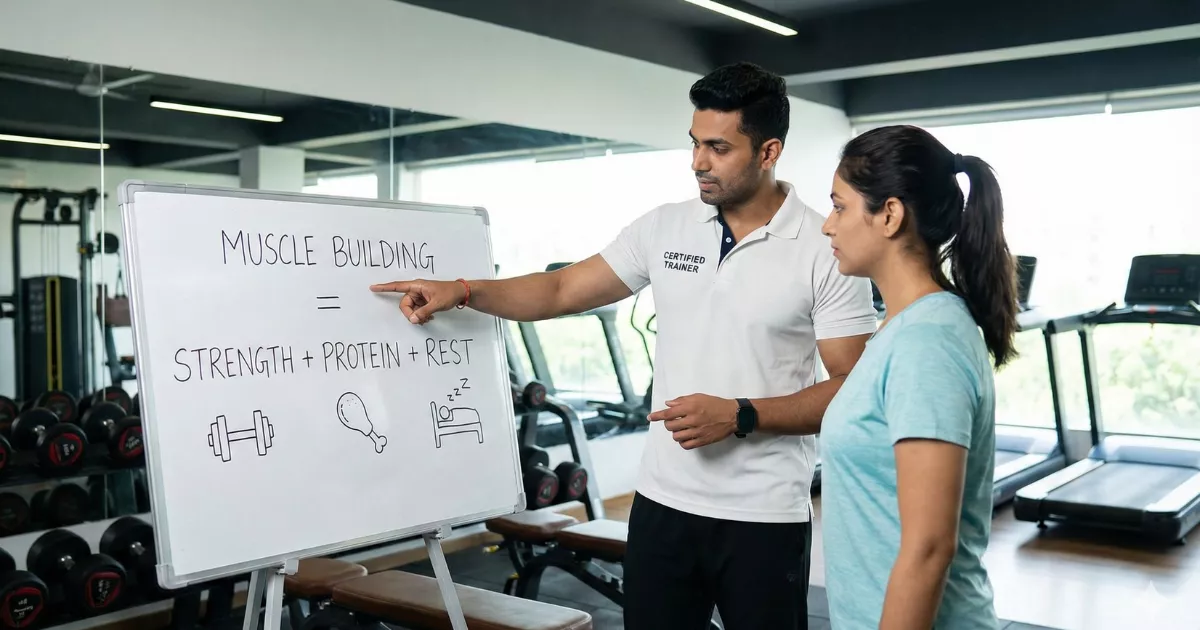
What is muscle building? This is one of the most common questions beginners ask when they start their fitness journey. Many people think muscle building means becoming bulky or lifting very heavy weights in the gym. But in reality, muscle building is much simpler and more practical than that.
In easy words, muscle building means making your muscles stronger and slightly bigger over time through proper exercise, nutrition, and recovery. It is not only for bodybuilders. Muscle building is important for anyone who wants better strength, improved posture, higher energy levels, and long-term health.
For many beginners in India, the focus is only on weight loss. But building muscle is equally important because it improves metabolism, supports fat loss, and makes the body look toned rather than weak. Even small increases in muscle mass can make a big difference in daily performance.
In this beginner-friendly guide, you will clearly understand what is muscle building, how muscle building works, why it is important, and what you actually need to start safely. No complicated science—just a simple explanation that you can apply in real life.
Muscle building works best when combined with proper training and food habits, which we have explained in what is exercise and why it is important.
What Is Muscle Building?
To understand how to build muscle naturally, you need to understand what muscles actually do. Muscles help you move, lift, walk, sit, and even maintain posture. Muscle building simply means increasing the strength and size of these muscles over time through proper training and nutrition.
In simple terms, muscle building is improving your muscle mass by challenging your body with resistance exercises like push-ups, squats, lifting weights, or resistance bands. When you perform strength training, your muscles experience small stress. During recovery, your body repairs them and makes them slightly stronger. This process is how muscle building works.
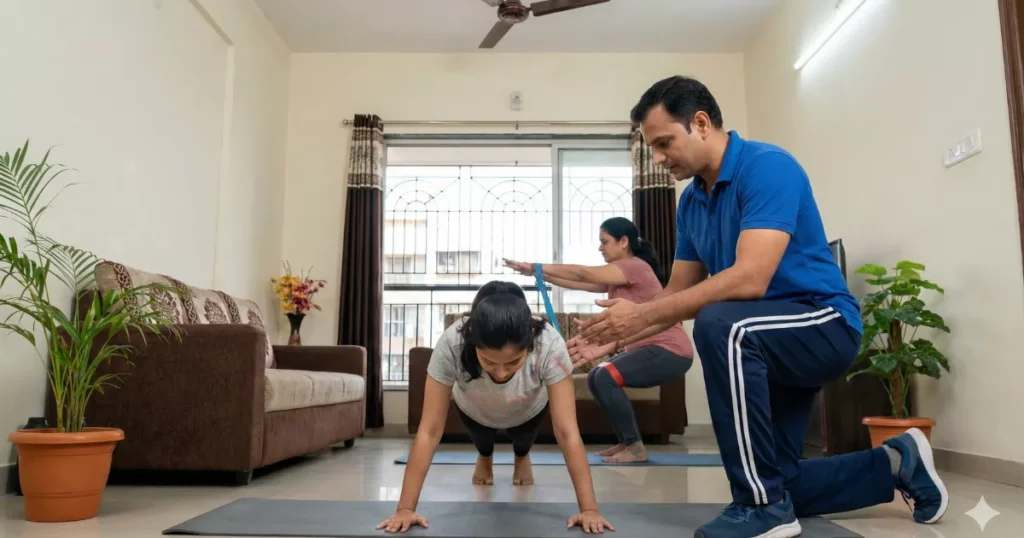
For muscle building for beginners, it is important to know that you don’t need to lift very heavy weights from day one. Even bodyweight exercises done consistently can start the muscle-gain process. The key is gradual progression and proper form.
Many people confuse muscle building with becoming bulky. But muscle gain basics are actually about building a strong, functional body—not extreme size. Whether your goal is better health, fat loss, or improved stamina, learning how to build muscle naturally gives long-term benefits.
Now that you understand what muscle building is, let’s move to the simple science behind it.
How Muscle Building Works (Simple Science)
Now that you understand muscle building, let’s break down how muscle building works in a very simple way. You don’t need complicated biology to understand this process.
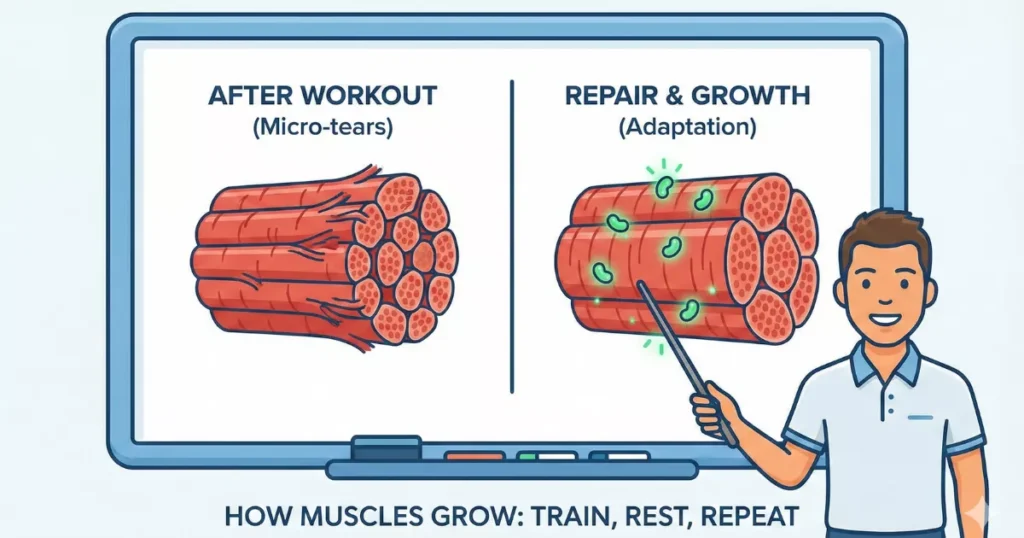
When you perform strength training—like squats, push-ups, or lifting weights—your muscles experience small microscopic damage. Don’t worry, this is normal and necessary. This stress tells your body that it needs to adapt and become stronger. During rest, your body repairs those muscle fibres using nutrients, especially protein. When the repair happens, the muscles become slightly stronger and thicker than before. This is the basic science behind muscle gain.
According to research-based health sources, muscle growth happens through a process called hypertrophy, where muscle fibers repair and become stronger over time.
For muscle building for beginners, three things are essential: resistance training, proper nutrition, and recovery. Without exercise, there is no stimulus. Without enough protein and calories, the body cannot repair properly. And without sleep, muscle building slows down. Protein plays a major role in muscle repair, as discussed in detail in what is protein and why is it important.
Many beginners think working out daily without rest will build muscle faster. In reality, muscles grow during recovery, not during the workout itself. That’s why rest days are important in any muscle building program.
Understanding how muscle building works helps you train smarter instead of harder.
Why Is Muscle Building Important?
Many beginners focus only on weight loss, but understanding what is muscle building is and why it matters can completely change your fitness results. Muscle building is not just about appearance—it plays a major role in overall health and daily performance.
First, stronger muscles improve your strength and posture. Whether you are lifting groceries, sitting for long hours at work, or climbing stairs, muscle strength makes everyday tasks easier. Weak muscles often lead to back pain, poor posture, and low energy.
Second, muscle building supports fat loss and metabolism. Muscle tissue burns more calories than fat, even at rest. This means the more muscle you build, the better your body becomes at using energy. That’s why muscle building for beginners is helpful even if the goal is fat loss.
Third, muscle building improves long-term health. It strengthens bones, supports joint stability, and reduces the risk of injuries. As we age, natural muscle loss happens, so learning how to build muscle naturally helps protect your body in the future.
In simple words, muscle building is not about becoming bulky. It’s about building a stronger, healthier, and more confident version of yourself.
Muscle Building vs Fat Loss: Are They Different?
Many beginners get confused between muscle building and fat loss. They think they have to choose only one goal. But in reality, both are connected, and understanding the difference helps you train smarter. If you are confused about body composition changes, read our guide on fat loss vs weight loss for better clarity.
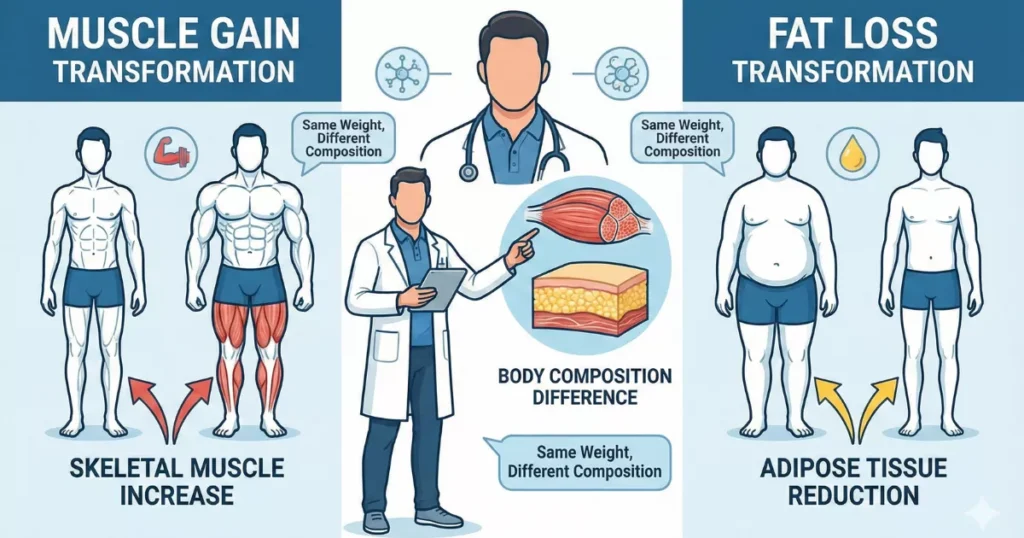
Muscle building focuses on increasing muscle strength and size through resistance training and proper nutrition. Fat loss focuses on reducing excess body fat. The methods overlap—both require exercise, enough protein, and consistency—but the calorie balance may differ slightly.
For beginners, it is actually possible to build muscle and lose fat at the same time. This is often called “body recomposition.” When someone new starts strength training and improves their diet, the body responds quickly. Muscle mass increases slowly while fat decreases gradually. The weighing scale may not change much, but the body looks leaner and stronger.
This is why understanding muscle gain basics is important. If you only focus on weight loss by eating very little, you may lose muscle instead of fat. That slows metabolism and makes long-term progress harder.
So instead of asking, “Should I build muscle or lose fat?”, the better question is: “Am I training and eating in a way that supports both?”
For most beginners, a balanced approach works best.
What Beginners Need for Muscle Building

If you truly understand the basics of muscle building, the next step is knowing what you actually need to start. The good news is that muscle building for beginners does not require complicated plans or expensive equipment. You only need to focus on a few basics.
First is strength training. Your muscles need resistance to grow. This can be bodyweight exercises like push-ups, squats, lunges, and planks, or simple weight training with dumbbells or resistance bands. The key is progressive overload—slowly increasing difficulty over time.
Second is proper nutrition, especially protein. Protein helps repair and build muscle fibres after workouts. Without enough protein and calories, muscle growth slows down. Learning how to build muscle naturally means combining training with balanced meals, not extreme dieting.
Third is sleep and recovery. Muscles grow when you rest, not while you train. Aim for 7–8 hours of sleep and include rest days in your routine.
Lastly, consistency matters more than perfection. A simple beginner muscle-building guide always focuses on regular effort, not quick results.
Build strong habits first. Muscle will follow.
How Long Does Muscle Building Take?
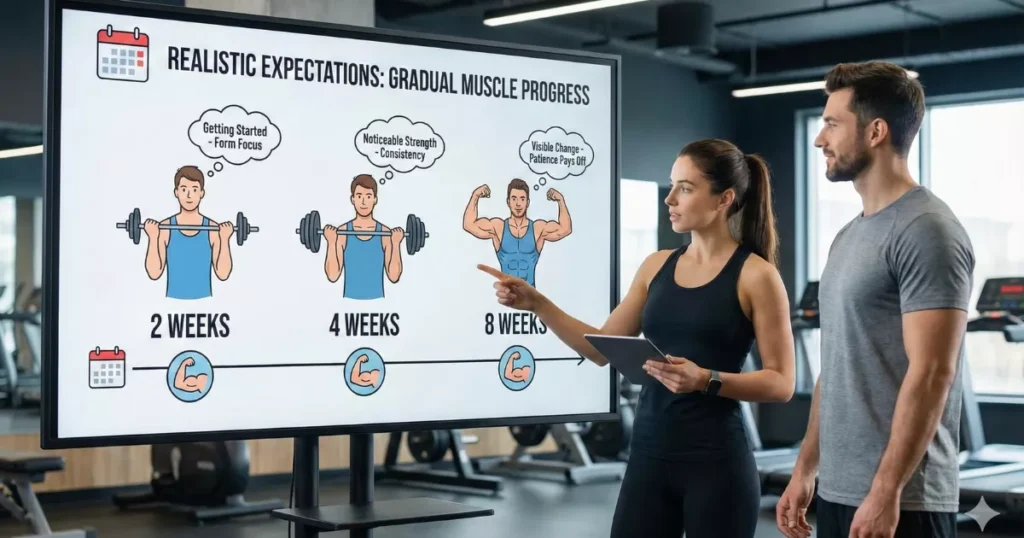
One of the most common questions for any beginner in a muscle-building guide is how long does it take to see results? The honest answer is—muscle building takes time, but beginners often see changes faster than they expect.
In the first 2–3 weeks, you may not see visible muscle growth, but you will feel stronger. This happens because your nervous system becomes more efficient. Around 4–8 weeks, beginners may start noticing small visual changes—slightly firmer muscles, better posture, and improved strength. Clothes may fit differently even if the weight stays the same.
For noticeable muscle size increase, it usually takes 8–12 weeks or more, depending on consistency, diet, sleep, and training quality. Muscle building for beginners can feel exciting because the body responds quickly in the early stages, often called “newbie gains.”
However, muscle gain basics require patience. Building muscle naturally is a slow and steady process. Quick transformations shown on social media are often unrealistic or not sustainable.
The key is to focus on strength improvement, proper nutrition, and recovery. If you stay consistent for months—not days—you will see real progress.
Muscle building is not a race. It’s a long-term investment in your body.
Common Muscle Building Myths Beginners Believe
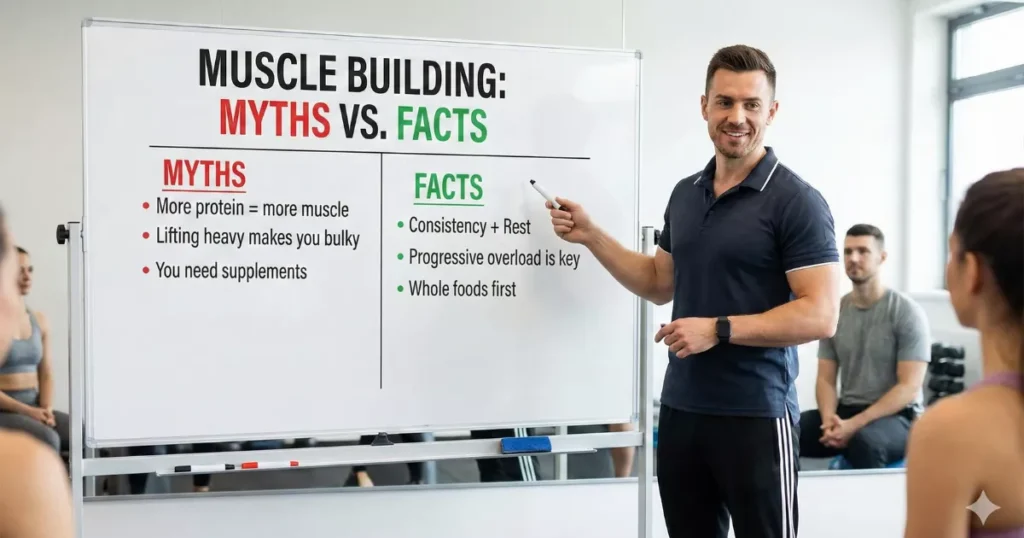
When learning the concept of muscle building, many beginners get confused because of common myths. These myths often create fear or unrealistic expectations.
One popular myth is “muscle building only happens in the gym.” This is not true. While gym equipment can help, muscle building for beginners can start at home with bodyweight exercises like push-ups, squats, and lunges. Resistance is what matters—not location.
Another myth is “you must lift very heavy weights to build muscle.” In reality, muscle growth depends on progressive overload, not just heavy weights. Even moderate resistance with proper form and consistency supports muscle gain basics.
Many people also believe “muscle building makes you bulky.” This fear is common, especially among beginners. Building large muscles takes years of intense training and a specific diet. Normal strength training helps create a lean and toned look, not extreme bulk.
Some think supplements are mandatory. The truth is, learning how to build muscle naturally through proper food, protein intake, and recovery is enough for most beginners.
The biggest myth is expecting fast results. Muscle building is gradual. Consistency always beats shortcuts.
Once you understand these myths, you can train with confidence and realistic expectations.
Conclusion
Now you clearly understand what is muscle building, how muscle building works, and why it is important for long-term health. Muscle building is not about becoming bulky or lifting extreme weights. It is about making your body stronger, improving posture, supporting fat loss, and increasing daily energy.
For beginners, muscle building for beginners should focus on simple strength training, proper nutrition, enough protein, good sleep, and consistency. You don’t need complicated routines or shortcuts. Learning the muscle gain basics and applying them regularly will give better results than chasing quick transformations.
Remember, building muscle naturally takes time. Small improvements in strength, better body shape, and improved stamina are all signs of progress. Stay patient and keep your approach balanced.
If you feel confused about how to start or how to structure your workouts correctly, getting proper guidance can make your journey smoother. With personalised fitness guidance, you can train safely, avoid common mistakes, and build muscle step by step according to your body type and goals.
Start simple. Stay consistent. Strong results will follow.
FAQs – What Is Muscle Building? (Beginner Questions)
1. What is muscle building in simple words?
Muscle building means making your muscles stronger and slightly bigger through proper exercise, nutrition, and recovery.
2. Can beginners build muscle at home?
Yes. Muscle building for beginners can start at home using bodyweight exercises like push-ups, squats, and lunges.
3. How much protein is needed for muscle building?
Most beginners need around 1.2–1.6 grams of protein per kg of body weight, depending on activity level.
4. Does muscle building increase body weight?
Sometimes yes. Muscle is denser than fat, so weight may increase slightly while body fat decreases.
5. How long does it take to build muscle?
Beginners may feel stronger in 2–3 weeks and see visible changes in 4–8 weeks with consistency.
6. Do I need supplements for muscle building?
No. You can build muscle naturally with proper food, enough protein, strength training, and rest.
7. Can I build muscle and lose fat at the same time?
Yes. Beginners often experience body recomposition—losing fat while gaining muscle.
8. How many days a week should beginners train?
3–4 strength training sessions per week are enough for most beginners.
9. Is lifting heavy weights necessary for muscle growth?
Not always. Progressive overload and proper form are more important than just lifting heavy weights.

Certified Personal Trainer & Nutrition Coach (12+ Years Experience)
Mohammad Hasnain helps beginners understand fat loss, workouts, and nutrition in a simple, practical, and science-based way without extreme diets.
Read more about the author



One Comment