
Standing Side Bend Exercise: Proper Form, Muscles Worked & Benefits
Standing Side Bend Exercise: Dumbbell Side Bends
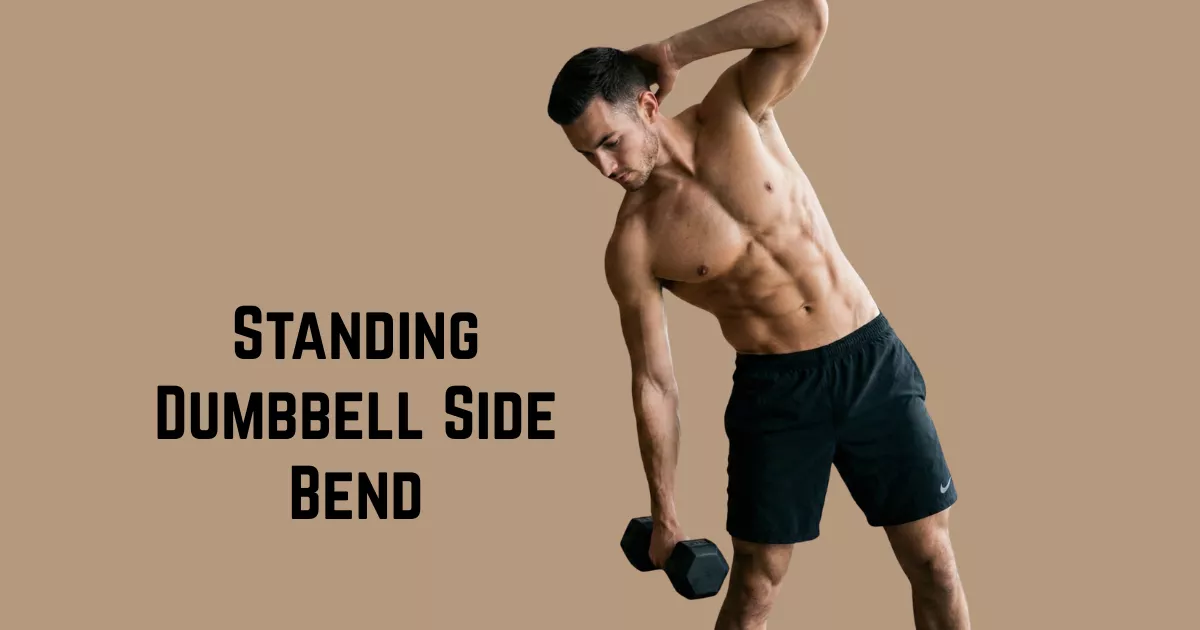
Standing Dumbbell side bend exercise mainly target the oblique muscles, which are on the sides of your waist. Along with broomstick twists, side bends are one of the most common exercises to strengthen and shape the side abs.
Side bends are simple and effective because they help build strong obliques. Strong obliques support your core, improve stability, and help you maintain good posture during other exercises.
You can do this exercise using light dumbbells, a weight plate, a cable machine, or even a bar placed behind your head.
Single-Arm Dumbbell Side Bend
You can train one side at a time. Hold a light dumbbell in your left hand and keep your arm straight at your side. Place your right hand behind your head or on your waist for better balance.
Slowly bend your upper body to the right side as far as comfortable. Bend only from your waist, not your hips. The dumbbell acts as a counterweight and helps control the movement. Then return to the starting position by squeezing your oblique muscles.
After finishing your reps, switch sides. Hold the dumbbell in your right hand and bend your body to the left side. Lower the dumbbell toward your knee, then come back up by contracting your obliques. Focus on feeling the muscles on the side of your waist working.
You can also bend toward the same side that is holding the dumbbell. In this case, the opposite side obliques work harder to bring your body back up. This means when you bend to the right, the left obliques work, and when you bend to the left, the right obliques work.
Exercise Key Points to Remember
- Use light weight and do high repetitions, around 15–20 reps on each side.
- Do not lean forward or backward. Move your upper body only to the side.
- Keep the movement slow and controlled. Do not swing the dumbbell.
- Keep your shoulders and hips straight and stable during the exercise.
- As you lower the dumbbell, control the movement. Do not let gravity pull it down fast.
- Bend your torso about 45 degrees, or until the dumbbell reaches near your knee.
- If you hold dumbbells in both hands, the weights balance each other, so the focus on each side may reduce. Training one side at a time gives better oblique activation.
Muscles Engaged
This exercise mainly works the muscles on the side of your waist when you bend your body. The quadratus lumborum does most of the work, along with the internal and external obliques, which help bend and stabilize your torso.
Main muscles worked:
- Quadratus lumborum (deep side lower back muscle)
- Internal obliques
- External obliques
Secondary muscles worked:
- Spine support muscles
- Rectus abdominis (front abs / six-pack muscle)
- Psoas (deep core and hip muscle)
Opposite (antagonist) muscles:
- The same muscles on the opposite side of your body help control and balance the movement.
Benefits of Standing Side Bend Exercise
- Strengthens Oblique Muscles: This exercise targets the internal and external obliques, helping to build stronger and more defined side abs.
- Improves Core Stability: Strong obliques help stabilize your core, which improves balance and supports your body during other exercises.
- Enhances Waist Definition: Regular training helps tone the sides of your waist, giving a more lean and aesthetic appearance.
- Improves Posture: It strengthens muscles that support your spine, helping you stand straighter and maintain proper posture.
- Supports Lower Back Strength: It works the quadratus lumborum and other supporting muscles, which help protect and strengthen your lower back.
- Improves Functional Movement: Side bending movements are common in daily life. This exercise improves your ability to bend and move safely.
- Easy and Beginner-Friendly: It is simple to perform and can be done with light dumbbells, making it suitable for beginners and home workouts.
- Helps Improve Mind-Muscle Connection: Slow and controlled movement helps you focus on your obliques, improving muscle activation and results.
Read More: V-Ups Exercise: Proper Form, Benefits, Muscles Worked & Core Strength Guide
Conclusion
The Standing Side Bend exercise is a simple and effective exercise to strengthen and tone the oblique muscles. It helps improve core stability, posture, and overall waist definition when performed with proper form and control. Using light weight and focusing on slow, controlled movement ensures better muscle activation and reduces the risk of injury.
Adding this exercise to your regular core workout can help build a stronger, more balanced core and support better performance in other exercises and daily activities. For best results, combine it with other abdominal exercises that target all areas of the core.
One Comment